A bilingual blog by Carmelo Ruiz-Marrero dedicated to all things fun, like music, cinema, comedy and sci-fi. Contact: ruiz@tutanota.com - Un blog bilingüe de Carmelo Ruiz Marrero dedicado a todo lo que sea divertido, como música, cine, comedia y ciencia ficción. Contacto: ruiz@tutanota.com
“Dying Songs” focuses on melancholic electronic music but isn’t limited to that. Sometimes it gets dark, sometimes I try to mix techno awkwardly, sometimes i get nostalgic… I like stuff that’s dreamy, ghostly, pretty and sad. I’ll try out new productions of my own, as well. I’m keeping it pretty open and we’ll see how it evolves.” – Jimmy
The beauty and mystery of Po Girl's music - a sound that has beguiled fans the world over - springs from the mesmerizing bond shared by its two lead singers and writers - Allison Russell and Awna Teixeira. Hailing from Montreal and Toronto respectively, both women left untenable home situations at fourteen, found music instead of bad ends, and lived to sing the tales. The interplay between these two stunning performers is truly something to behold. You'll hear echoes of speakeasy jazz, the western lament, the accordion-strapped ghosts of European folk accompanied by the wail of the clarinet in the music of Po'Girl-- but it's delivered with a soulful clarity, and depth of feeling that makes it all their own. It seems almost silly - and not very interesting - to trot out a long, endlessly hyphenated list of the many influences coursing through Po Girl's music. Suffice to say it's 21st Century roots music - North Americana if you will--never derivative, not faithfully aping a beloved tradition. Teixeira and Russell don't re-hash the old forms, they reshape and reinvigorate them for new ears. Since Po'Girl's birth in Vancouver, BC in 2003- Russell and Teixeira (and an ever revolving cast of stellar musical friends), have averaged over 250 days/year on the road --bringing their inimitable roots revelry to 13 countries, and 4 continents-- winning over new fans and friends everywhere they go. With 5 internationally critically acclaimed studio albums, a live album, a b-sides album, and a DVD to their credit with Po'Girl- Alli and Awna have firmly established themselves as two dynamic, compelling songwriter/singer/multi-instrumentalists with true staying power.
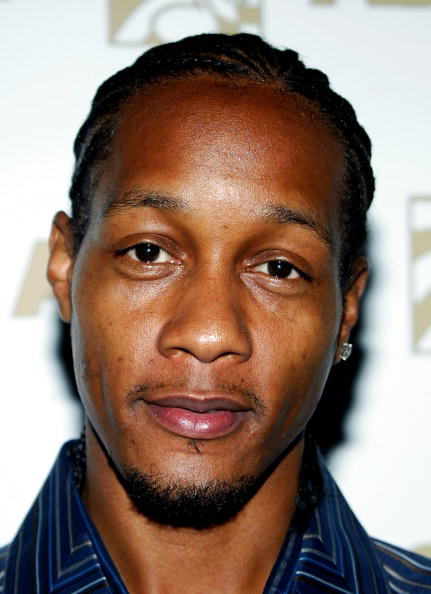
DJ Quik is one of the most prolific figures in West Coast hip hop. He's a great rapper, but first and foremost, he's always considered himself a producer. He's produced some of the most inventive samples and beats of the genre. And even though he geeks out about latest and greatest studio equipment, he's always used whatever it takes to capture the sound he wants -- even if it means recording a music sample with a VCR.
Quik first made a name for himself in the hip hop scene in the late 80's and early 90's, handing out homemade mix tapes and deejaying around Los Angeles. He's since released ten albums, and produced records for everyone from Tupac, Snoop Dogg and Xzibit to Tony! Toni! Toné!.
He'll talk about why a leaked record and a couple of guns made him realize he needed a new circle of friends, why he never wants to stop making pretty beats for his records and his inspiration for his awesome, awesome hairstyles over the years.
DJ Quik's new EP is calledRosecrans. It's available now.
Quadrophenia is a 1979 British film, loosely based on the 1973 rock operaof the same name by The Who. The film stars Phil Daniels as Jimmy, a young 1960s London-based Mod who escapes from his dead-end job as amailroom boy by dancing, partying, taking amphetamines, riding his scooter and brawling with the motorcycle-riding Rockers.
After he and his friends participate in a huge brawl with the Rockers at the seaside town of Brighton, he is arrested and his life starts to spiral out of control; he loses his girlfriend (Leslie Ash) and discovers that his idol, the popular mod nicknamed "Ace Face" (Sting) is actually a bell boy at a hotel.
It was directed by Franc Roddam in his feature directing début. Unlike the film adaptation of Tommy,Quadrophenia is not a musical film, and the band does not appear live in the movie.
Quadrophenia is the sixth studio album by English rock band The Who, released on 26 October 1973 by Track Records. It is a double album and the group's second rock opera. The story follows a young mod named Jimmy and his search for self-worth and importance, set in London and Brighton in 1965. It is the only Who album to be entirely composed by group leader Pete Townshend.
The group started work on the album in 1972, trying to follow up Tommy and Who's Next, which had both achieved substantial critical and commercial success. Recording was delayed while bassist John Entwistle and singer Roger Daltrey recorded solo albums and drummer Keith Moon worked on films. Because a new studio was not finished in time, the group had to use Ronnie Lane's Mobile Studio. As well as the group's typical playing styles, especially from Moon, the album makes significant use of Townshend's multi-tracked synthesizers andsound effects, and Entwistle's layered horn parts. Relationships between the group and manager Kit Lambertbroke down irretrievably during recording and he had left the band's services by the time the album was released.
Quadrophenia was released to a positive reception in both the UK and the US, but the resulting tour was marred with problems with backing tapes replacing the additional instruments on the album, and the stage piece was retired in early 1974. It was revived in 1996 with a larger ensemble, and a further tour occurred in 2012. The album made a positive impact on the mod revival movement of the late 1970s, and the resulting film adaptation, released in 1979, was successful.
From the Wikipedia: Drama is the tenth studio album by the English rock band Yes, released on 18 August 1980 by Atlantic Records. It is their only album to feature Trevor Horn as lead vocalist, following the departure of Jon Anderson and Rick Wakeman in March 1980 after unsuccessful recording sessions for a new album in Parisand London. Horn was joined by keyboardist Geoffrey Downes, his partner in the new wave band The Buggles. Drama was recorded in a short amount of time as a tour was already booked prior to the change in personnel. It marked a departure in the band's musical direction with songs more accessible and aggressive that featured the use of modern keyboards and a vocoder.
The album opens with the ten-minute "Machine Messiah" which, according to Horn, was written in one day.[13] It features some guitar riffs from Howe that reporter and critic Chris Welch described as "unexpectedly heavy metal".[8] White called the song his "baby", putting together much of its structure and rhythm. Squire found some of its passages difficult to play on his bass and thought it was more suited for keyboards, but was encouraged by White to master his parts. Downes rates the track highly, citing its various sections and mood changes.[14] When he was composing his keyboard parts for the song, Downes was influenced by the fifth movement of Symphony for Organ No. 5 by Charles-Marie Widor, a piece that he was familiar with from his youth.[15]
"White Car", recorded in one afternoon, originated from Downes who wrote the music inspired by watching Horn drive his car at the time, a white Stingray, which was given to him by his record company. Horn proceeded to write the lyrics based on pop figure Gary Numan who used to perform with his face painted white, something which is referenced in the lyric "Move like a ghost on the skyline".[13] Downes only played a Fairlight CMI synthesiser on the recording, to test its sampling capabilities: "I tried to simulate an orchestra using these samples, but it was very early days of digital sampling. The bandwidth was very narrow, but that's what gave it all that characteristic 'crunch factor'. We then added the vocoder and Trevor's vocal to the mix".[16]
"Does It Really Happen?" originated from the 1979 Paris sessions, with White coming up with its drum pattern. A version featuring Anderson singing a different set of lyrics was recorded, but it was shelved until it was developed further when Horn and Downes joined and made additions to the song. Horn and Squire wrote new lyrics.[13]
"Into the Lens" was originally completed by Horn and Downes before they joined the group, but Squire took a liking to it and wished to re-arrange it as a Yes track.[17] The track features Downes using a vocoder, further highlighting the band's new sound.[18] A version recorded by Horn and Downes only was later released on the second Buggles album, Adventures in Modern Recording (1981), with the title "I Am a Camera".
"Run Through the Light" features Howe playing a Les Paul guitar, "in the background being very melancholy" with Squire playing a piano and Horn playing bass, something which Horn did not particularly wish to do but Squire convinced him to perform. "I didn't quite know what to play on it ... one day we spent twelve hours playing and working the final bass part".[17] A different version of the song was recorded with Anderson.
"Tempus Fugit" was another song sketched out by the Squire, Howe and White trio in late 1979. Its title is an English translation of "time flies" in Latin. According to Howe, its name was derived from Squire's habit of arriving late to places.[17]
The group produced additional tracks that remained incomplete, but were performed during their 1980 tour: "We Can Fly from Here" and "Go Through This". Recordings of each were released as part of the live compilation album The Word is Live, in 2005. The former was used and expanded into a 20-minute suite on Yes's 2011 studio album, Fly from Here. A third track, "Crossfire", later included on In a Word: Yes (1969–), was used as part of "That, That Is" (from Keys to Ascension).
A rhythmic journey through all genres of music, exploring the past, present and future of good grooves… old, new, borrowed, and true.
Since beginning her career as a DJ and selector, Monalisa has gained respect and support from key influencers in the music & DJ industry, namely Pete Rock, Peanut Butter Wolf, DāM-FunK, Garth Trinidad, and the World Famous Beat Junkies. She’s done sets for favorable crowds at well known Los Angeles-based events such as Firecracker, Boombox, Rootdown, Kiss N Grind, Thanksgivends, Funkmosphere, Strictly Social, Wonder-Full, SoulSlam, The Do-Over, Afrofunke, Blazing 45s, Paid Dues, and Motown On Mondays. Monalisa is a member of LA’s own Umoja HiFi Soundsystem and KPL All-Stars, as well as Spinderella’s Backspin DJ Crew. She can usually be found working behind the scenes at Amoeba Music in Hollywood, digging for classics and discovering new music.